When you’re considering studying abroad, understanding how teaching and learning differs between countries might help you decide where you’d like to study.
Around the world you’ll find many different teaching and learning models. Some are driven by lecturer-led learning and assessments that prioritise exams. Others are designed to develop independence of thought, critical thinking, and real-world problem solving.
In this blog, we’ll share what teaching and learning is like in UK universities and how it compares to other countries and teaching styles around the world.
Contents:
- What is it like to study at a UK university?
- Learning to think, not just memorise
- How will I be assessed?
- Real-world learning and skills
- Learning style and career success
- Preparing for a career, not just an exam
- How Newcastle University can help you succeed
What is your preferred learning style? What teaching methods will set you up for career success? And where will you find the best teaching method for you?
As different countries and cultures evolve and innovate in their approach to teaching in higher education, it’s important to understand the differences so that you can make the best decision for your future and for your own learning preferences.
What is it like to study at a UK university?
UK universities are known for a student-focused approach. That means you’re encouraged to take an active role in your education, with teaching designed to support independent thinking, creativity and self-motivation.
This means that when studying at a UK university you can expect:
A flexible and focused degree structure
UK undergraduate degrees are typically three years long (or four in Scotland), and initially most offer a broad range of topics in year one. For example, if you choose to study psychology, you will receive a broad introduction to core areas of psychology and develop skills in research and analysis.
Each academic year is divided into modules worth a certain number of credits. These may include lectures, seminars, workshops and laboratory work, depending on the subject.
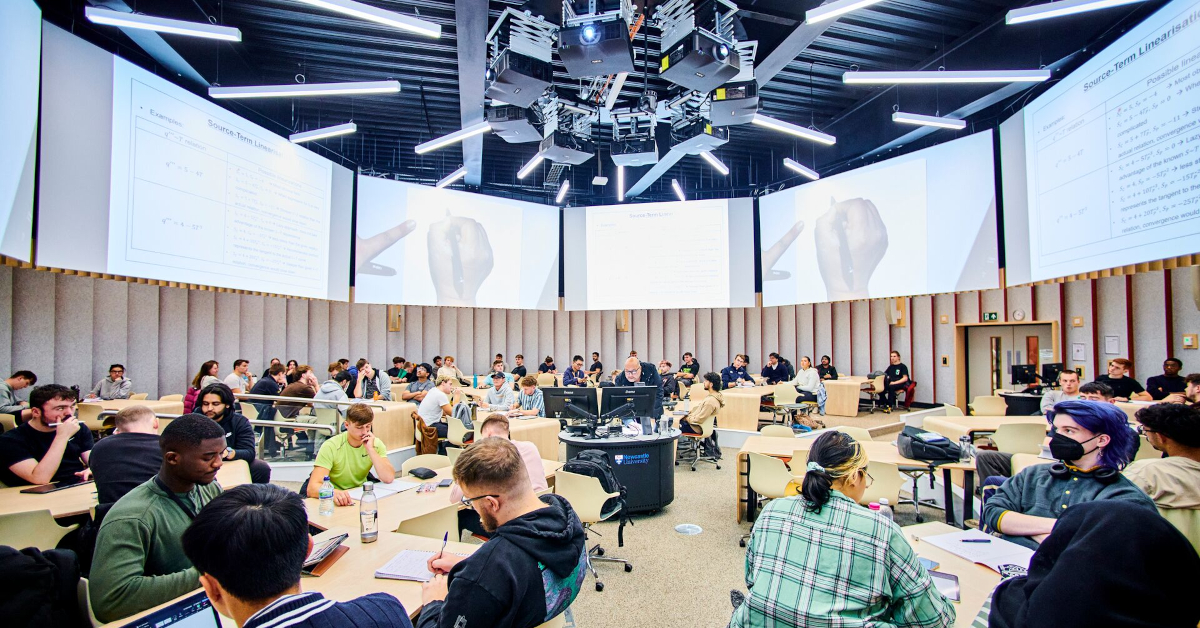
Smaller teaching groups and more interaction
UK universities tend to offer blended learning. This means that learning happens in a variety of formats, including:
- lectures (larger sessions led by an expert in the field)
- seminars or tutorials (smaller discussion-based classes)
- independent study time (reading, research, assignments)
This 'blend' gives you the chance to ask questions, develop your opinions and learn from classmates, as well as learning from academics and industry experts.
Academic advisers
All students are assigned an academic adviser, someone that you can go to for academic or pastoral support. You’ll also often have access to study skills workshops, English language support, and wellbeing services at most UK universities.
The UK model offers a balance: structured learning with freedom to explore ideas, strong links with industry, and a clear focus on personal growth and employability.

Academic support is vital to a rounded higher education experience. Credit: Chris Bishop.
Learning to think, not just memorise
One of the biggest differences between the UK and many other education systems is the emphasis on critical thinking.
UK universities encourage you to:
- evaluate information and form your own arguments
- explore different perspectives and challenge ideas
- apply your knowledge in real-world contexts
In other words, you don’t just gain knowledge - you know how to use that knowledge and apply it in many different situations. This is just how you’re likely to use your knowledge in the workplace after you graduate.
Assignments often involve essays, group projects, presentations and research tasks. These are all designed to help you build confidence in your own ideas and become a more independent learner. This can feel different to learning methods in some other countries, where students may be more used to memorising facts and preparing for national exams.
How will I be assessed?
Assessment in the UK usually includes a mix of:
- coursework - essays, reports, portfolios
- exams - often at the start or end of each term or year
- presentations - group or individual
- dissertations, consultancy or research projects - especially in your final year
Importantly, you’ll receive ongoing feedback to help you improve, not just a final grade. Academic tutors are there to guide you through the process and help you build confidence in your abilities.
Real-world learning and skills
UK universities are committed to bridging the gap between academic learning and career success. While it varies from subject to subject, teaching is often closely linked to the world of work, with many courses offering:
Industry-informed teaching
Courses are regularly updated to reflect current industry needs. Employers often contribute to curriculum design and deliver guest lectures, ensuring you gain relevant, up-to-date knowledge.
At Newcastle University, for example, our students studying subjects like business, engineering or media take part in real-world projects and can hear directly from professionals working in those industries.
Work experience and placements
Many - although not all - degree courses offer the opportunity for placement years or short internships, giving you hands-on experience before you graduate. You’ll learn how to apply your academic skills in a professional setting, making you more employable. And even if your programme doesn’t include it, students are often encouraged to seek out internships to boost their experience. Most UK universities offer a careers service to help with developing those skills and opportunities.
Enterprise and innovation opportunities
If you're interested in starting your own business or working in creative industries, most UK universities provide support through enterprise hubs, funding competitions and mentoring schemes. If this interests you, you’ll be encouraged to think like an entrepreneur - solving problems, pitching ideas and building your own future.
Teaching Excellence Framework (TEF)
The UK’s Teaching Excellence Framework (TEF) measures the quality of teaching at universities and recognises institutions that go above and beyond in preparing students for life after graduation. The existence of TEF ensures that universities are constantly innovating in - and improving - their approaches to teaching and the student experience.
At Newcastle University our outstanding teaching experience was most recently awarded TEF Silver (2023).

Students can gain hands-on experience through work experience and placements. Credit: John Donoghue.
Learning style and career success
When you graduate from a UK university, you’ll have developed more than just subject knowledge. You’ll have:
- confidence in solving problems and thinking independently
- experience working in teams and communicating clearly
- a global perspective from studying with students from around the world
- a CV (resume) that shows both academic achievement and real-world experience
Employers across sectors - from engineering to finance, healthcare to the creative arts - value graduates who are ready to adapt, lead and contribute from day one.
This means that graduates of UK universities are known globally for their:
- analytical skills, critical thinking and willingness to lead in problem solving
- ability to work independently and as part of a team
- strong English communication
- cultural awareness and adaptability
- digital and entrepreneurial mindset.
At Newcastle University, our students benefit from one-to-one career support, employer networking events, skills workshops and tailored advice to help them transition from university into their chosen careers.
Preparing for a career, not just an exam
Choosing where to study is a big decision. But just as important is how you’ll learn when you get there.
The UK’s student-focused, future-ready approach puts you at the centre of your education. It challenges you to think critically, communicate clearly and develop the skills that employers around the world need.
How Newcastle University can help you succeed

We’ve been voted UK Top for Student Life (Uni Compare Rankings 2027). Find out why – explore our friendly city, beautiful campus and the community where you’ll belong.